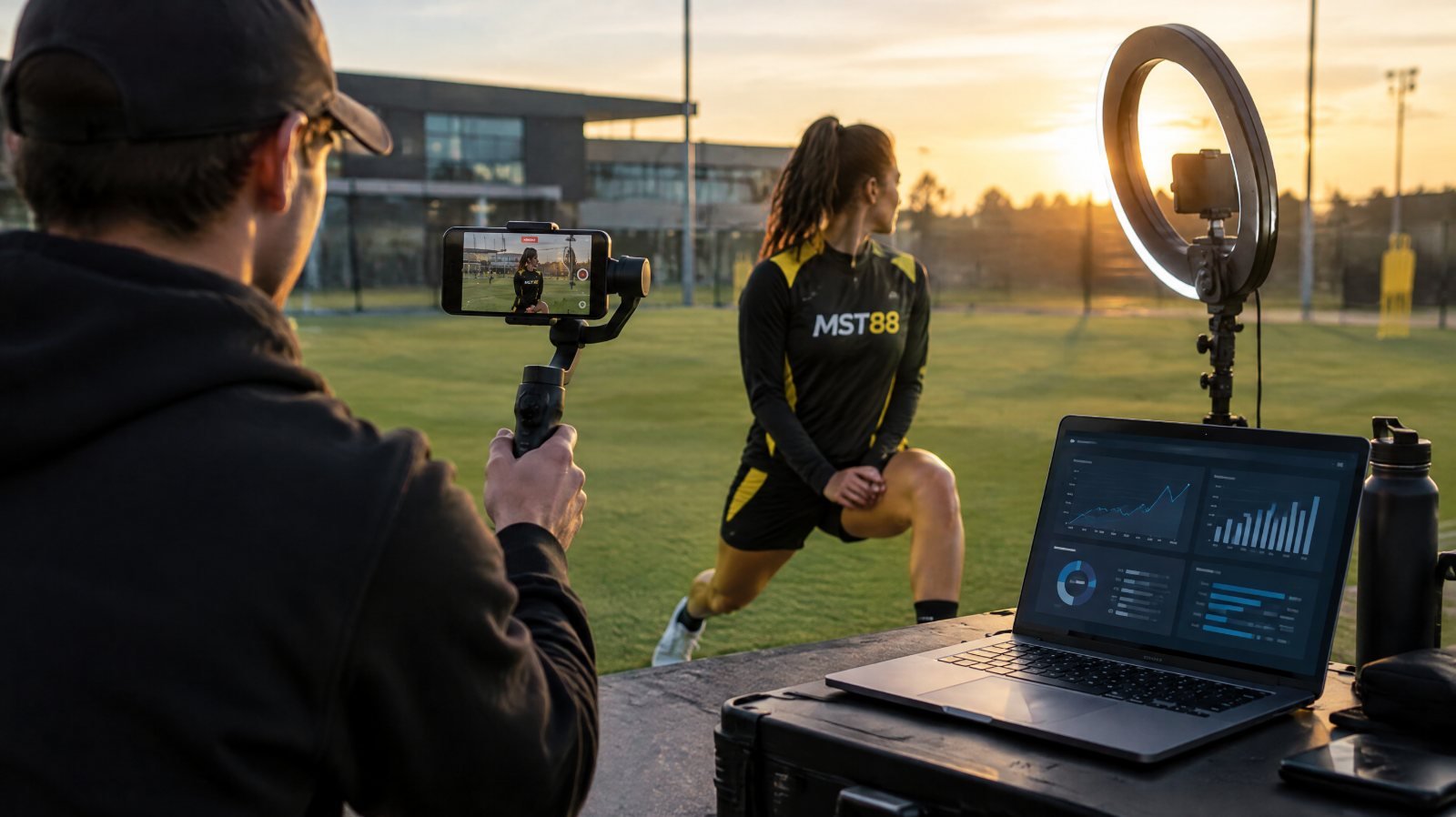
Sponsorship ROI: The Metrics Brands Actually Use
There is no single number for sponsorship return. Here are the metrics brands actually use, where each one misleads, and how to build a measurement plan both sides can trust.
Sponsorship ROI is the question every brand eventually asks: what did we get back for the money we put into a team, an athlete or an event? The honest answer is that there is no single number. Brands that measure sponsorship well use a set of metrics, from exposure and audience reach to brand perception, leads, sales and business-to-business outcomes, and they choose those metrics before the deal is signed. This guide explains the metrics brands actually use, where each one is useful and where it misleads, and how Malaysian sponsors and rights holders can build a measurement plan that stands up in a boardroom.
We draw on published industry frameworks and on one of the most documented sponsorship relationships with a Malaysian brand at its centre: Petronas and the Mercedes Formula One team, a partnership that began in 2010 and has been publicly defended, explained and extended several times since.
Why sponsorship ROI is hard to measure
Paid advertising is relatively easy to measure. You buy a defined number of impressions or clicks and you can track what happens next. Sponsorship is different in three ways.
First, sponsorship is a bundle of rights rather than a single media buy. A typical deal might include logo placement, naming rights, hospitality, content rights, access to athletes, product supply, data and the right to call yourself an “official partner”. Each right has a different kind of value.
Second, the effects are often slow and indirect. A sponsor may be building brand preference over years, opening doors with business partners, or recruiting staff who want to work for a company associated with a successful team. None of that shows up in next month’s sales report.
Third, sponsors are rarely trying to achieve one thing. Petronas illustrates this well. When the company defended its Formula One spending in 2016, it did not point to a single metric. As reported by Lubes’n’Greases, it cited brand strength, business growth, technical development of fuels and lubricants, and the role of the partnership in opening doors for lubricant sales, including factory-fill supply of its engine oils for certain Mercedes-AMG cars. Its chief executive at the time, as quoted by Marketing-Interactive, rejected the idea that the company was simply paying “to put our sticker on the car”.
Good measurement starts by accepting this complexity and building a framework around it rather than searching for one magic figure.
Start with objectives: ROI versus ROO
Many practitioners distinguish between return on investment (ROI), which compares a financial return with the cost of the deal, and return on objectives (ROO), which measures progress against goals that may not be directly financial, such as awareness or employee engagement. In practice, most serious sponsors use both.
The most important step happens before the contract is signed: writing down what the sponsorship is supposed to achieve. Typical objectives include:
- Awareness: getting a brand known in a new market or among a new audience.
- Image and positioning: associating the brand with qualities such as performance, technology, national pride or community.
- Sales and leads: driving purchases, sign-ups or enquiries.
- Business-to-business: using hospitality and access to build relationships with partners and customers.
- Product development: using the sport as a testing ground, as Petronas says it does with fuels and lubricants.
- Content: generating material for the brand’s own channels.
- Internal: staff pride, engagement and recruitment.
Each objective needs its own metric, a baseline measured before the deal starts, and a target. Without a baseline, you cannot show change. Without a target, you cannot say whether the change was good enough.
Exposure and media value metrics
Exposure metrics are the most common, and the most frequently misused, part of sponsorship measurement.
How exposure is measured
Measurement companies track every time a sponsor’s logo or name appears in broadcast, streaming and social content. Increasingly this is done by computer vision. A 2023 report from Sixteen:Nine described how one analytics platform uses AI models to detect and track logos on players, stanchions, signage, stands, team benches and equipment, then combines those detections with audience data to estimate impressions and reach. Academic work is moving in the same direction: a 2025 paper on ExposureEngine describes a model for detecting rotated and skewed logos in football broadcasts and calculating visibility metrics such as exposure duration and on-screen coverage.
Turning exposure into money
Exposure is then often converted into a monetary “media value” by asking what equivalent advertising time or space would have cost. Better methodologies discount the raw figure for quality. Nielsen, for example, describes a Quality Index (QI) Media Value in which each exposure is weighted using a proprietary quality score, combining audience data with advertising rates, and in which non-sponsor exposures are removed. Factors that usually affect quality include how large and clear the logo is, how long it is on screen, whether it is shared with other logos and where it sits in the frame.
The Petronas example
Petronas is one of the few Malaysian sponsors to have discussed an exposure figure publicly. In 2016, as reported by Marketing-Interactive citing The Star, the company said its Formula One partnership had generated US$901.08 million (about RM3.7 billion) in global media exposure, a measure of the value of brand exposure from live and repeat race broadcasts. The same report said Petronas had not released official figures for what it spends on the sponsorship. The Edge Malaysia later reported the same exposure figure alongside other indicators, including the growth of Petronas Lubricants International’s global market share ranking.
Notice how the company presented the figure: as one indicator among several, not as the whole case. That is the right way to use media value.
The limits of media value
The communications measurement industry has been sceptical of advertising-equivalent figures for years. The Barcelona Principles, first agreed at a summit convened by the International Association for Measurement and Evaluation of Communication (AMEC) in 2010 and revised in 2015 and 2020, state plainly that “AVEs are not the value of communication,” according to the summary of the principles. The principles were written for public relations, but the same criticism applies to sponsorship: a logo seen in the background of a broadcast is not the same as an advertisement that viewers chose to watch, and exposure says nothing about whether anyone noticed, remembered or acted.
Media value is useful for comparing assets (is the shirt front worth more than the sleeve?) and for tracking change over time. It should not be presented as the return on a sponsorship.
Audience and engagement metrics
Beyond raw exposure, brands increasingly measure who they reached and how those people responded.
Reach and audience quality
Reach measures how many distinct people saw the brand in connection with the sponsorship. Audience quality asks whether those people match the brand’s target customers by age, location, income or interest. A sponsorship that reaches fewer people but more of the right people can outperform a larger one.
Social and digital engagement
For sponsorships that include content rights or athlete posts, brands track impressions, video views, completion rates, engagements (likes, comments, shares, saves), follower growth on their own channels and traffic to campaign pages. These metrics are easy to collect, which is both a strength and a weakness: they are useful for optimising content, but high engagement does not automatically mean business value.
Sentiment and conversation
Social listening tools measure how often the brand is mentioned alongside the sponsored property, and whether the tone is positive, neutral or negative. Sentiment matters particularly when a sponsor is associated with a controversial moment, or when fans react to a change such as a new kit or livery.
Brand impact metrics
Brand metrics measure what happens inside people’s heads, and they are usually the closest proxy for long-term value.
Awareness and sponsor recall
Surveys ask fans whether they know which brands sponsor a team or event, both unprompted and prompted. Comparing recall before and after the season, and comparing fans with non-fans, shows whether the sponsorship is being noticed and correctly attributed.
Consideration and preference
More useful still are questions about consideration (would you consider buying this brand?) and preference (which brand would you choose?). The strongest evidence comes from comparing fans who are aware of the sponsorship with similar people who are not.
Brand attributes
If a sponsor wants to be seen as innovative or trustworthy, surveys can track whether those associations strengthen over time. Petronas offers a qualitative example: the team principal of Mercedes said, as reported by The Edge Malaysia in 2017, that the brand had moved from being known to “a few insiders” in 2010 to being among the most recognised in Formula One. That is a brand-impact claim, and a sponsor would want survey data behind it.
Commercial and business outcome metrics
Ultimately, most sponsors need to connect the partnership to revenue or to business relationships.
Sales and leads
Direct sales attribution works best when the activation is designed for it: unique discount codes, dedicated landing pages, sponsor-specific products, ticket bundles or in-store promotions tied to the team. Without these, sales effects can only be estimated, usually by comparing regions or periods with and without activation.
Business-to-business value
For many corporate sponsors, the most valuable rights are hospitality and access. Measurement here is practical: how many client meetings were hosted, which deals were influenced and what pipeline value was associated with those relationships. Sales teams should be asked to log sponsorship-related contacts in their customer relationship systems.
Product and technology outcomes
Some sponsors use sport as a laboratory. Petronas told Lubes’n’Greases in 2016 that around 200 fuels had been developed and tested with Mercedes, 20 of them used on track, along with more than 50 engine oils, transmission fluids and hydraulic fluids. In an October 2026 interview with Bernama, Mercedes team principal Toto Wolff described the partnership as a “completely integrated organisation”, while deputy team principal Bradley Lord said Petronas had to build a full supply chain for its advanced sustainable fuel, a project of around two and a half to three years of research and development. For a sponsor like this, the number of products developed and the commercial value of that technology are legitimate parts of the return.
Cost of the deal versus cost of alternatives
ROI also depends on the cost side, which includes not just the rights fee but activation spending, staff time, hospitality and production. A frequent mistake is to compare benefits with the rights fee alone. Another useful comparison is with the cost of achieving similar results through other marketing channels.
A practical framework and measurement plan
The metric families at a glance
The table below summarises the main metric families, what they tell you and where they mislead.
| Metric family | Examples | Best for | Main limitation |
|---|---|---|---|
| Exposure | Logo seconds on screen, number of exposures, share of screen | Comparing assets and placements | Says nothing about attention or effect |
| Media value | Quality-weighted equivalent advertising cost | Benchmarking and trend tracking | Not the value of the sponsorship itself |
| Reach and audience | Unique reach, demographic match | Checking you reach the right people | Depends on audience data quality |
| Engagement | Views, completions, shares, comments | Optimising content | Easy to inflate; weak link to sales |
| Sentiment | Positive, neutral and negative mentions | Spotting risk and fan reaction | Automated tone analysis can misread local language and slang |
| Brand impact | Recall, consideration, preference, attributes | Long-term value | Needs surveys and baselines |
| Sales and leads | Code redemptions, sign-ups, attributed revenue | Direct commercial return | Only works if activation is designed for it |
| B2B outcomes | Hosted clients, influenced pipeline | Corporate and hospitality-led deals | Relies on sales teams logging data |
| Product / technical | Products developed, technical milestones | Technology partners | Hard to value financially |
A sensible dashboard picks one or two metrics from each relevant family rather than tracking everything. For a consumer brand sponsoring a Malaysian football club, that might be quality-weighted exposure, social engagement on co-branded content, prompted sponsor recall among fans and redemptions of a fan-only offer. For a business-to-business sponsor of a motorsport event, hospitality guests and influenced pipeline may matter far more than broadcast exposure.
Ten steps to a measurement plan
Whether you are a brand evaluating a deal or a rights holder trying to retain a sponsor, the following steps produce a measurement plan that both sides can trust.
- Agree objectives in writing. List no more than three or four primary objectives and rank them.
- Choose metrics for each objective. Use the framework above. Avoid metrics that do not connect to any objective.
- Measure a baseline. Run awareness and perception surveys, record current social following and capture sales or lead data before activation begins.
- Set targets. Agree what “good” looks like for each metric over the term of the deal.
- Design activation for measurement. Build in unique codes, landing pages, registration forms and tracked links from the start.
- Specify data sharing in the contract. Rights holders should commit to supplying broadcast logs, audience figures, attendance numbers and content analytics on a fixed schedule.
- Budget for measurement. Set aside part of the activation budget for research and analytics. Measurement that is not funded rarely happens.
- Report regularly. Use a consistent monthly or quarterly format so that trends are visible.
- Review mid-term. Adjust activation based on what the data shows rather than waiting for the end of the contract.
- Run a full evaluation before renewal. Compare results against targets and against the full cost of the deal, then decide whether to renew, renegotiate or exit.
An illustrative example
To see how the steps fit together, imagine a hypothetical regional sports-drink brand that sponsors a state badminton academy in Malaysia for two seasons. The scenario is illustrative only; the point is the structure, not the numbers.
The brand’s primary objectives are to increase awareness among teenagers and parents in the state, and to drive trial of a new product. Its secondary objective is content for its social channels. Before the deal starts, it surveys a sample of parents and students at partner schools to record current awareness of the brand, and it notes its follower count and the product’s existing sales in the state.
Activation is designed for tracking: sampling stations at academy tournaments with a QR code linked to a registration page, a discount code printed on tournament programmes, and a monthly series of training videos featuring the academy’s coaches. The contract obliges the academy to supply attendance figures for each event, raw photos and video within 48 hours, and access to post analytics for co-branded content.
At the mid-point, the data shows strong engagement on coaching videos but low code redemptions. Rather than wait for renewal, the brand moves sampling closer to the courts and adds a parents’ clinic. At the end of the second season it repeats the survey, compares awareness with the baseline, totals redemptions and registrations, and sets these against the full cost of rights, product, staff and production. Only then does it decide whether to renew. Every step relied on decisions made before the first shuttle was hit.
Sponsorship ROI in the Malaysian context
Several features of the Malaysian market shape how sponsorship return should be measured here.
Naming rights under scrutiny
League title sponsorships are a highly visible asset, and they come under scrutiny when budgets tighten. The Malaysia Super League has carried several title sponsors over its history, from TM to Astro, Unifi, CIMB and CelcomDigi, according to the league’s sponsorship record, which also notes that TM ended its Unifi-branded deal at the end of 2019 to save costs. Whatever the specific reasons in each case, the pattern is a reminder that title sponsorships must be able to show their value against other uses of the same budget.
Multilingual audiences
Malaysian fans consume content in Bahasa Malaysia, English, Chinese and Tamil. Sentiment analysis and social listening tools tuned for English can miss or misread conversations in other languages and in mixed local slang. Brands should check that their measurement partners can handle the languages their fans actually use.
Performance-linked commitments
Malaysian corporate sponsors frequently attach rewards to results. Ahead of the Paris 2024 Olympics, as reported by Malay Mail, a property developer offered a serviced apartment and a car distributor offered an SUV to Malaysia’s first Olympic gold medallist, and a retail group chairman pledged a personal RM1 million sponsorship to be shared by two badminton doubles pairs if they won gold. Pledges like these generate publicity at announcement and, potentially, at payout. Measuring them properly means tracking the attention created at both moments, and, as discussed in our athlete sponsorship guide, formalising them in contracts.
Tax treatment and incentives
The net cost of a sponsorship depends partly on tax. Malaysian tax law includes provisions for contributions to approved sports activities and bodies, and in October 2025 The Sun reported a 50 percent tax exemption for private firms staging international sporting events, an initiative welcomed by the Youth and Sports Ministry. Finance teams should factor the applicable treatment into the cost side of any ROI calculation.
Long-term relationships
The most visible Malaysian sponsorships are long-running. Petronas has been involved in Formula One since the 1990s and has backed the Mercedes team since 2010; in September 2022 the two sides announced a multi-year extension from 2026 that ties the title partnership to the sport’s new sustainable fuel regulations. For long relationships like these, ROI should be assessed over multiple years, with periodic reviews rather than a single verdict.
Frequently asked questions
What is a good sponsorship ROI?
There is no universal benchmark, because sponsorship objectives vary so widely. A good return is one that meets the targets agreed at the start of the deal, measured against the full cost including activation. Be wary of anyone quoting a standard ratio without explaining the method behind it.
Is media value the same as ROI?
No. Media value estimates what equivalent advertising exposure would have cost. It is useful for comparing placements and tracking trends, but measurement bodies such as AMEC have long stated that advertising-equivalent figures are not the value of communication. Treat media value as one input, not the answer.
How do smaller Malaysian brands measure sponsorship without big research budgets?
Use low-cost tools: unique discount codes, tracked links, simple pre- and post-season surveys of customers, social media analytics and records of leads and enquiries. Even basic data, collected consistently, is better than none.
What data should a rights holder provide to sponsors?
At minimum: attendance figures, broadcast and streaming audience data where available, logs or examples of logo exposure, social and content analytics for co-branded posts, and records of hospitality and activation delivered. The best rights holders agree a reporting template with each sponsor at the start of the deal.
How long does it take to see a return from sponsorship?
Activation-driven sales effects can appear within a campaign. Brand effects such as awareness and preference usually build over one or more seasons. That is why multi-year deals are common and why mid-term reviews are important.
Does computer vision make sponsorship measurement accurate?
It makes exposure measurement faster and more complete, particularly across broadcast, streaming and social content. It does not measure whether viewers noticed or cared, so it should be combined with survey and commercial data.
Conclusion
Measuring sponsorship ROI well is less about finding the perfect metric and more about discipline: agreeing objectives in advance, measuring a baseline, choosing a balanced set of metrics, designing activation so results can be tracked, and writing data obligations into the contract. Exposure and media value have their place, but they are the start of the story, not the end. The sponsors that can defend their investments, as Petronas has done publicly with its Formula One partnership, are those that can point to brand, commercial and strategic outcomes together.
MST88 News is published by MST88, an independent publisher covering the business of sport. We cover sponsorship across Southeast Asia; teams, athletes and event organisers can reach us through the Partnerships page.
Sources
- Petronas earns RM3.7 bln in global media exposure for F1 partnership (Marketing-Interactive)
- Petronas continues to reap benefits of F1 participation (The Edge Malaysia)
- Petronas Defends Racing Sponsorship (Lubes'n'Greases)
- Barcelona Principles (Wikipedia)
- Sponsorship Media Value Benchmarking Report (Nielsen)
- AI platform Relo Metrics uses computer vision to track sponsor impressions (Sixteen:Nine)
- ExposureEngine: Oriented Logo Detection and Sponsor Visibility Analytics in Sports Broadcasts (arXiv)
- Wolff and Lord on the Petronas partnership (Bernama)
- Mercedes, PETRONAS announce multi-year extension (Ministry of Sport)
- Malaysia Super League (Wikipedia)
- What awaits Malaysia's first Olympic gold medallist (Malay Mail)
- Malaysia offers 50% tax relief for world-class sports event organisers (The Sun)
MST88 News is published by MST88, an online gaming and sports entertainment brand (mst88.com). Our articles are independent editorial explainers about sports sponsorship and are for information only. Links to mst88.com are clearly labelled and open in a new tab; that site is for adults 18+ only.